

Pregnancy Diabetes Treatment in Hubli-Dharwad
Pregnancy diabetes, or gestational diabetes, develops when placental hormones block insulin from working properly, pushing blood sugar levels too high. Uncontrolled, it raises the risk of large birth weight, preterm delivery, and preeclampsia. Early screening and tight blood sugar control protect both mother and baby through every trimester of pregnancy.
According to Dr. Sandeep Donagaon, Endocrinologist in Hubli Dharwad, “Gestational diabetes often shows up without obvious symptoms. A single glucose tolerance test between weeks 24 and 28, followed by the right diet and medication plan, can prevent most complications for the mother and her baby.”
Getting the right pregnancy diabetes treatment in Hubli-Dharwad means more than just controlling numbers. It means a plan that adapts week by week. Many women don’t realise their blood sugar is rising until it’s already affecting the pregnancy.
Book an Appointment with Dr. Sandeep Donagaon
Types of Diabetes That Can Affect Pregnancy
Not all pregnancy diabetes is the same. The treatment depends on whether diabetes existed before conception or appeared during pregnancy itself. Each type calls for a different approach.
Common Forms of Diabetes in Pregnancy
Gestational diabetes
This develops only during pregnancy, usually in the second or third trimester. It often disappears after delivery but raises the lifetime risk of Type 2 diabetes.
Pre-existing Type 2 diabetes
Women already living with Type 2 diabetes need their treatment plan reviewed and adjusted the moment they plan a pregnancy.
Pre-existing Type 1 diabetes
Type 1 diabetes in pregnancy demands intensive insulin management and close fetal monitoring throughout all three trimesters.
Pre-diabetes turning into pregnancy diabetes
Borderline blood sugar before pregnancy can quickly tip into full diabetes once placental hormones kick in.
Why Pregnancy Hormones Matter
The placenta produces hormones that make the body less responsive to insulin. The pancreas works harder to compensate. When it can’t keep up, blood sugar climbs. This usually starts around the 20th week and worsens through the third trimester. So a woman with a normal glucose test in early pregnancy can still develop diabetes later, which is why repeat screening matters.
Catching this shift early changes everything. That’s why focused diabetes treatment from a DM Endocrinologist gives expecting mothers a clear edge over general care.
Book an Appointment with Dr. Sandeep Donagaon
Warning Signs and Risks Expecting Mothers Should Know
Most women with pregnancy diabetes feel completely normal. The condition is silent more often than not, which is exactly what makes routine screening so important
Signs That Deserve a Closer Look
Unusual thirst
Drinking more than normal, especially with frequent urination, can signal rising blood sugar.
Persistent fatigue
Tiredness that doesn’t lift with rest sometimes points to glucose the body can’t use properly.
Recurrent infections
Urinary or yeast infections that keep coming back are a known clue in pregnancy.
Blurred vision
Sudden changes in vision can reflect blood sugar spikes affecting the eyes.
What Untreated Pregnancy Diabetes Can Cause
Uncontrolled blood sugar raises the risk of a very large baby, shoulder dystocia at delivery, preterm birth, and preeclampsia. Babies can develop low blood sugar right after birth and face a higher risk of obesity and Type 2 diabetes later in life.
For the mother, the risk of needing a caesarean rises, and so does the chance of developing Type 2 diabetes within ten years of delivery. The good news is that tight control during pregnancy brings these risks down sharply. Most women with well-managed gestational diabetes deliver healthy babies and recover normal blood sugar after birth.
Many women managing blood sugar in pregnancy also need careful support with weight, where focused obesity and weight loss protocols can make a real difference.
How Dr. Donagaon Approaches Pregnancy Diabetes Treatment in Hubli-Dharwad
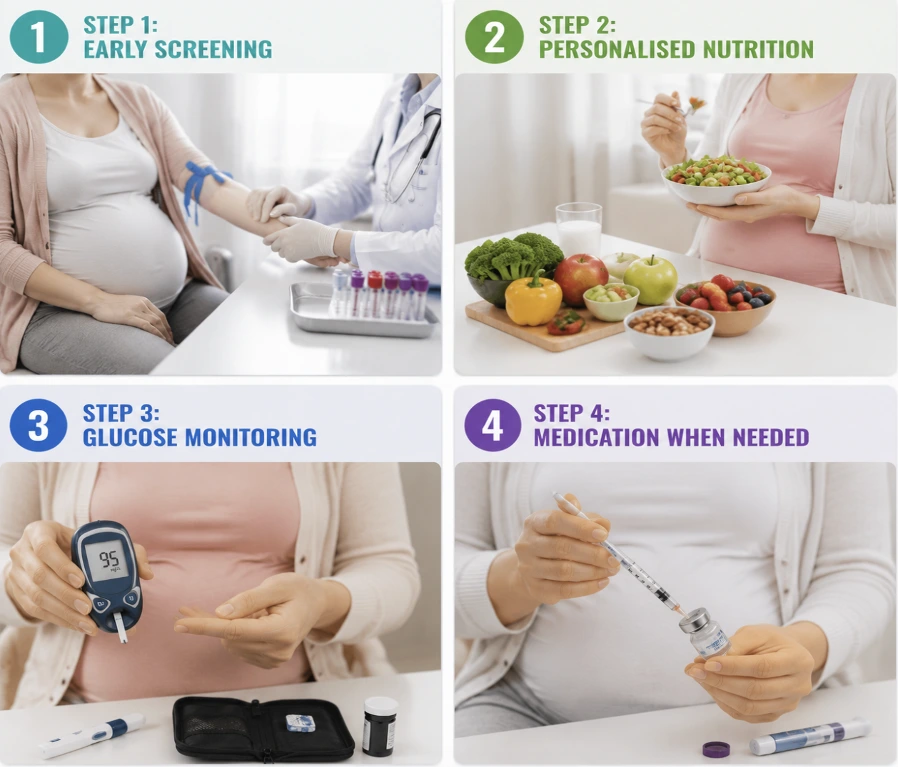
Managing blood sugar in pregnancy is about precision and pace. The targets are tighter than for non-pregnant patients, and the plan has to keep moving as the pregnancy progresses.
A Step-by-Step Treatment Plan
Early screening
Women with risk factors are screened in the first trimester; everyone else between weeks 24 and 28 using a glucose tolerance test.
Personalised nutrition
A diet plan with the right balance of complex carbs, protein, and fibre keeps blood sugar steady without starving the baby.
Glucose monitoring
Home blood sugar checks four times daily, fasting and after meals, show exactly how the body is responding.
Medication when needed
If diet alone isn’t enough, insulin is the safest option in pregnancy, with metformin used in selected cases under close supervision.
Pregnancy is a hormonal storm, and steady hormonal treatment helps the whole endocrine system stay balanced through every trimester.
Long-Term Recovery and Lifestyle After Pregnancy
The work doesn’t end at the delivery room. Blood sugar is rechecked six to twelve weeks after birth to confirm it’s returned to normal. Women with a history of gestational diabetes need annual screening for Type 2 diabetes for the rest of their lives. Breastfeeding is encouraged because it lowers future diabetes risk for both mother and baby.
Since insulin resistance is the root issue behind most pregnancy diabetes, our blog on insulin resistance natural treatment explains how lifestyle, food, and metabolism interact to drive blood sugar up or down.
For wider context, the Cleveland Clinic’s guidance on gestational diabetes and the Cleveland Clinic Journal of Medicine review on diabetes and pregnancy both confirm how important early evaluation and tight control are.
Why Choose Dr. Sandeep Donagaon for Pregnancy Diabetes Treatment in Hubli-Dharwad?
Blood sugar in pregnancy is too important for guesswork. Dr. Sandeep Donagaon holds a DM in Endocrinology and Metabolism, the highest qualification in the field in India, along with the SCE in Endocrinology from the United Kingdom. With over 10 years of clinical experience, he manages diabetes in expecting mothers at Dr. Sandeep’s Superspeciality Centre using pregnancy-specific glucose targets, personalised nutrition plans, and carefully titrated insulin therapy when needed. Not a general physician. A DM super-specialist who treats blood sugar and the whole endocrine system as one connected picture.
His approach is built around the patient. He listens carefully, explains every test result in plain language, and builds a treatment plan around your unique pregnancy, reflecting the clinic’s “Hormones in Harmony” philosophy. Trained at KIMS Hubli, JNMC Belagavi, and Ramaiah Medical College Bengaluru, he brings depth and consistency to every consultation. Expecting mothers across Hubli, Dharwad, and surrounding districts trust him because pregnancy diabetes needs a specialist, not a general approach. Consult Dr. Sandeep Donagaon at his Superspeciality Centre in Hubli-Dharwad today or call +91 8073047515.

Consult Hubli-Dharwad’s Leading Endocrinologist
Frequently Asked Questions
Is insulin safe during pregnancy?
Yes, insulin is the safest blood sugar medication in pregnancy and doesn’t cross the placenta.
When is gestational diabetes screening done?
Usually between weeks 24 and 28, or earlier for women with risk factors.
Can gestational diabetes harm the baby?
Uncontrolled, yes, but proper treatment brings the risks close to normal pregnancy levels.
Does gestational diabetes go away after delivery?
Mostly yes, but the risk of Type 2 diabetes later in life stays elevated.
Can I manage pregnancy diabetes with diet alone?
Many women can, but some need insulin if diet and exercise aren’t enough.
How often should I check blood sugar at home?
Usually four times daily, fasting and after each main meal during pregnancy.
References
- Cleveland Clinic — Gestational Diabetes: Causes, Symptoms & Treatment
https://my.clevelandclinic.org/health/diseases/9012-gestational-diabetes - Cleveland Clinic Journal of Medicine — Diabetes and Pregnancy: Risks and Opportunities (peer-reviewed)
https://www.ccjm.org/content/85/8/619