
If you are a woman who feels constantly tired, has gained weight without explanation, struggles with irregular periods, or has just been told your TSH is “a little high,” you are not alone. Thyroid disorders are far more common in women than in men, and the symptoms often get brushed aside as stress, ageing, or “just hormones.” But uncontrolled thyroid quietly affects energy, mood, fertility, periods, weight, hair, skin, and even heart health.
Dr. Sandeep Donagaon, one of the most trusted Endocrinologist in Hubli Dharwad at Dr. Sandeep’s Superspeciality Centre, treats hundreds of women every year with hypothyroidism, hyperthyroidism, Hashimoto’s, postpartum thyroiditis, and thyroid issues tied to pregnancy or PCOS. The most common question he hears is, “How do I actually control this?”
“Most women I see have been on the same thyroid dose for years without anyone checking if it still suits them. Thyroid control is not just about swallowing a pill. It is about the right diagnosis, the right dose, the right timing, and the right follow-up. When all four come together, the difference in how a woman feels is enormous.“
— Dr. Sandeep Donagaon, Endocrinologist, Dr. Sandeep’s Superspeciality Centre, Hubli
Feeling tired all the time, gaining weight, or noticing changes in your periods or hair? Get your thyroid checked properly by a specialist who handles women’s thyroid issues every day.
Why Women Are More Prone to Thyroid Problems
Women are roughly eight times more likely than men to develop a thyroid disorder. The reasons are mostly hormonal. Estrogen, progesterone, and thyroid hormones share overlapping pathways, and any major hormonal event in a woman’s life can trigger thyroid dysfunction.
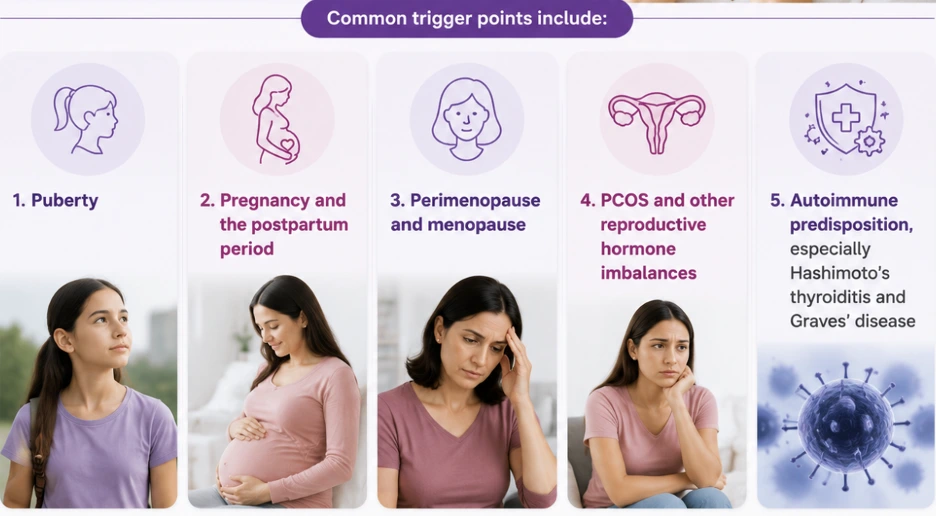
Common trigger points include:
- Puberty
- Pregnancy and the postpartum period
- Perimenopause and menopause
- PCOS and other reproductive hormone imbalances
- Autoimmune predisposition, especially Hashimoto’s thyroiditis and Graves’ disease
This is why thyroid testing in women should not be a once-in-a-lifetime affair. Getting structured hormonal treatment becomes essential whenever symptoms change or life stage changes.
First Step in Controlling Thyroid: Get the Right Diagnosis
Most women are told they have “thyroid” without knowing exactly what type, how severe, or whether it is autoimmune. Real control begins with the right tests.
A proper thyroid workup for a woman usually includes:
- TSH to check overall thyroid function
- Free T3 and Free T4 to see the actual hormone levels in circulation
- Anti-TPO antibodies to detect autoimmune thyroid disease like Hashimoto’s
- Thyroid ultrasound if nodules, swelling, or pain are present
- Vitamin D, B12, iron, and ferritin, because deficiencies worsen thyroid symptoms
Treating only TSH without checking the full picture is one of the most common mistakes. A normal TSH does not always mean the thyroid is controlled, especially if symptoms persist. Proper thyroid treatment starts with a complete workup, not a single number.
How to Control Thyroid in Female: Practical Daily Steps
Once diagnosis is clear, daily habits decide how well the thyroid stays in range. The following points cover what actually works, based on clinical practice.
Take your medication correctly: Levothyroxine, the most common thyroid medication, must be taken on an empty stomach, with plain water, at least 30 to 60 minutes before food, tea, or coffee. Calcium, iron, and antacids should be taken at least four hours later. Missed doses and inconsistent timing are the single biggest reason TSH stays uncontrolled.
Eat in a thyroid-friendly way: A balanced diet with adequate iodine (iodised salt, dairy, eggs, fish), selenium (Brazil nuts, eggs, fish), zinc (seeds, legumes), and protein supports thyroid function. Extreme low-iodine or high-iodine diets both backfire. Goitrogenic foods like cabbage, cauliflower, and soy are fine in normal cooked quantities and do not need to be eliminated.
Sleep, stress, and movement matter: Poor sleep raises cortisol, which interferes with thyroid hormone conversion. Chronic stress worsens autoimmune flares. Regular moderate exercise improves how the body uses thyroid hormone. Walking 30 to 45 minutes a day, prioritising 7 to 8 hours of sleep, and managing stress are not lifestyle fluff, they are part of treatment.
Follow up at the right intervals: TSH should be rechecked 6 to 8 weeks after a dose change, then every 3 to 6 months once stable. Annual review is the bare minimum for any woman on thyroid medication.
Treat related deficiencies: Many women feel “thyroid-like” symptoms even on the right dose because of low vitamin D, low iron, or low B12. Correcting these often resolves the residual fatigue and hair fall blamed on thyroid.
“A woman whose TSH is in range but who still feels tired is usually missing something else. Iron, B12, vitamin D, sleep, or sometimes a second hormonal issue. Looking only at the thyroid number is a mistake.“
— Dr. Sandeep Donagaon
On thyroid medication but still feeling tired, gaining weight, or losing hair? It may be time for a complete hormonal review, not just another TSH test.
Thyroid Control in Special Situations
Some life stages need extra attention.
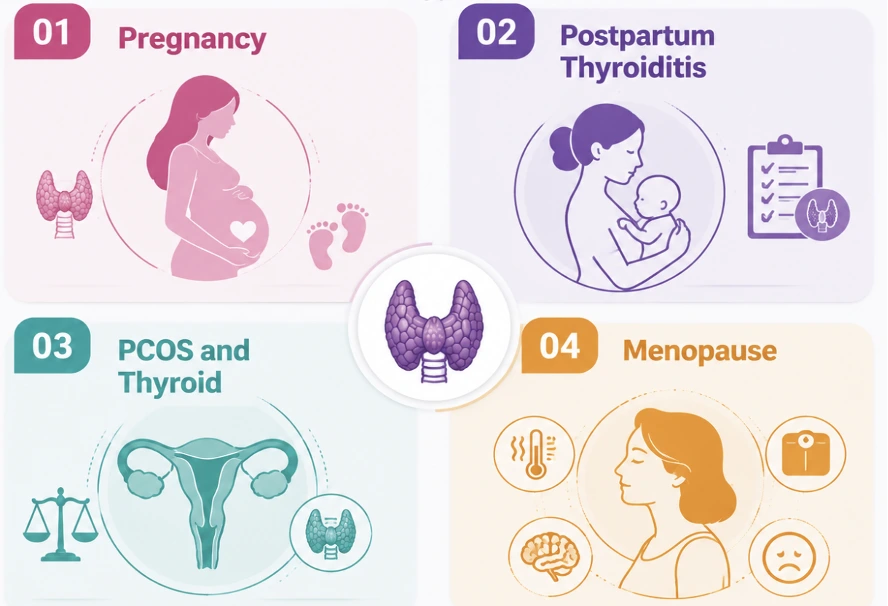
Pregnancy: Uncontrolled thyroid in pregnancy raises the risk of miscarriage, preterm birth, low birth weight, and developmental issues in the baby. Levothyroxine dose usually needs to be increased in early pregnancy, and TSH should be checked every 4 to 6 weeks. Many women now choose dedicated pregnancy thyroid treatment for this reason.
Postpartum thyroiditis: Up to 1 in 10 women develop thyroid inflammation in the first year after delivery, often mistaken for “baby blues” or postpartum fatigue. It is treatable and often temporary, but needs proper monitoring.
PCOS and thyroid: PCOS and hypothyroidism often coexist. Treating one without addressing the other leads to incomplete improvement in periods, weight, and fertility. A full hormonal treatment in Hubli Dharwad is often the right approach when both are present.
Menopause: Symptoms of low thyroid overlap heavily with menopausal symptoms. Hot flashes, weight gain, mood changes, and brain fog all need to be evaluated against both axes.
Reliable patient information on thyroid disease in women is also available from the American Thyroid Association and the Cleveland Clinic.
Common Mistakes That Keep Thyroid Uncontrolled
Many women unknowingly sabotage their own thyroid control. The most frequent mistakes seen in practice are:
- Stopping medication once symptoms improve
- Taking thyroid tablets with tea, coffee, or breakfast
- Doubling up on missed doses
- Changing brands frequently without retesting
- Treating only TSH and ignoring antibodies or T3 and T4
- Skipping follow-up tests for years
- Self-medicating with online “thyroid diets” or supplements without testing
Avoiding these alone improves outcomes significantly. Women with overlapping blood sugar concerns also benefit from coordinated diabetes treatment, since thyroid and metabolic health are deeply connected.
When to See an Endocrinologist
A general physician can manage straightforward hypothyroidism, but certain situations need specialist input. Consider seeing an endocrinologist if you have:
- Persistent symptoms despite “normal” TSH
- Repeated dose adjustments without stable control
- Pregnancy with thyroid disease, or trying to conceive
- Thyroid nodules or swelling
- Hyperthyroidism, Graves’ disease, or suspicion of thyroid cancer
- Coexisting PCOS, diabetes, or autoimmune disease
A specialist looks at the whole hormonal picture, not just one number.
Thyroid Care for Women in Hubli Dharwad by Dr. Sandeep Donagaon
Women’s thyroid issues need a doctor who treats them every single day. Dr. Sandeep Donagaon at Dr. Sandeep’s Superspeciality Centre in Hubli has years of focused experience in female thyroid disorders, autoimmune thyroid disease, thyroid in pregnancy, postpartum thyroiditis, and PCOS-related thyroid imbalance. Patients across Hubli, Dharwad, Belagavi, Gadag, Haveri, Davangere, and the wider North Karnataka region come to the centre for accurate testing, structured treatment plans, and clear follow-up schedules.
Frequently Asked Questions
How can a woman control thyroid naturally?
Natural support includes a balanced diet with adequate iodine, selenium, and zinc, regular exercise, good sleep, and stress management. These help, but they do not replace medication if your thyroid hormone levels are abnormal.
Can thyroid go away on its own in women?
Some forms, like postpartum thyroiditis or short-term thyroiditis, can resolve on their own. Most cases, especially autoimmune hypothyroidism, are lifelong and need ongoing medication and monitoring.
What is the best time to take thyroid medication?
First thing in the morning, on an empty stomach, with plain water, at least 30 to 60 minutes before food, tea, or coffee. Consistency in timing matters more than the exact hour.
Does thyroid affect periods and fertility in women?
Yes. Both underactive and overactive thyroid can cause irregular periods, heavy bleeding, anovulation, and reduced fertility. Controlling thyroid often restores normal cycles and improves fertility outcomes.
Who is the best endocrinologist for women's thyroid problems in Hubli Dharwad?
Dr. Sandeep Donagaon at Dr. Sandeep’s Superspeciality Centre, Hubli, is a highly experienced endocrinologist who specialises in female thyroid disorders, pregnancy-related thyroid issues, PCOS, and hormonal imbalances, and offers complete diagnosis and structured treatment for patients across North Karnataka.
References
- American Thyroid Association — Thyroid Disease in Women: https://www.thyroid.org/thyroid-disease-pregnancy/
- Cleveland Clinic — Hypothyroidism (Underactive Thyroid): https://my.clevelandclinic.org/health/diseases/8541-hypothyroidism