

Mounjaro (tirzepatide) has become one of the most talked-about medications for weight loss, and for good reason, many patients see meaningful results when it’s used correctly. But like any medication that changes how the body handles hunger, digestion, and blood sugar, it comes with a side-effect profile that’s worth understanding before you start, not after a problem shows up.
Dr. Sandeep Donagaon, a leading endocrinologist in Hubli Dharwad at Dr. Sandeep’s Superspeciality Centre, prescribes and monitors Mounjaro as part of a broader weight management and diabetes treatment plan, not as a standalone quick fix. His approach focuses on starting at the right dose, watching for early warning signs, and adjusting treatment before minor side effects become bigger problems.
“Mounjaro can be genuinely effective, but it isn’t a medication to self-adjust or continue without supervision. The side effects are usually manageable when we titrate the dose properly and keep an eye on the patient, the trouble starts when people push through symptoms on their own.”
— Dr. Sandeep Donagaon, Endocrinologist, Dr. Sandeep’s Superspeciality Centre, Hubli
How Mounjaro Works and Why Side Effects Happen
Mounjaro is a dual GIP and GLP-1 receptor agonist, meaning it acts on two separate gut-hormone pathways that regulate appetite, insulin release, and digestion. This dual action is part of what makes it effective for weight loss and blood sugar control, but it’s also why the most common side effects are digestive in nature. Slowing down how quickly the stomach empties helps reduce appetite, but it can also cause nausea, bloating, and changes in bowel habits, especially when the dose is increased too quickly. Most side effects are dose-related and tend to ease as the body adjusts, which is why treatment usually starts at a low dose and increases gradually rather than jumping straight to a higher one.
Common Side Effects of Mounjaro
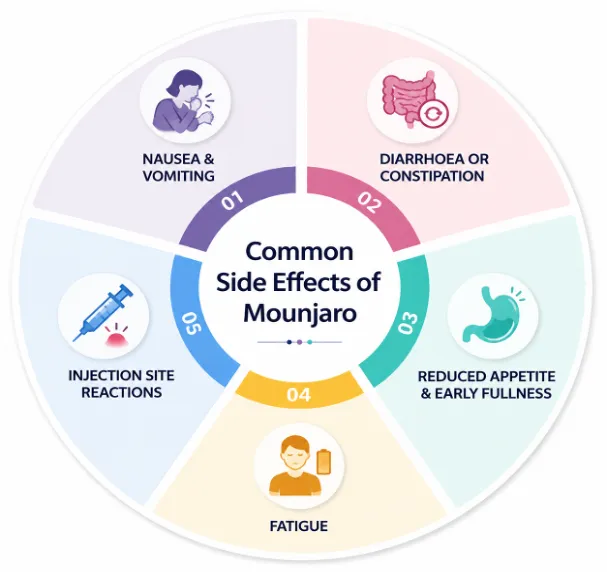
These are the effects seen most frequently, particularly during the first few weeks of treatment or after a dose increase.
Nausea and Vomiting:
The most commonly reported side effect, especially in the early weeks or right after a dose increase. Eating smaller meals and avoiding heavy, fatty food can reduce the intensity.
Diarrhoea or Constipation:
Mounjaro can shift bowel habits in either direction, and some patients experience both at different points during treatment.
Reduced Appetite and Early Fullness:
This is part of how the medication supports weight loss, but taken too far it can lead to inadequate food and fluid intake if not monitored.
Fatigue:
Some patients report low energy, particularly during the initial adjustment period or if calorie intake drops too sharply.
Injection Site Reactions:
Mild redness, itching, or swelling at the injection site is common and usually resolves on its own within a day or two.
Less Common but Serious Side Effects
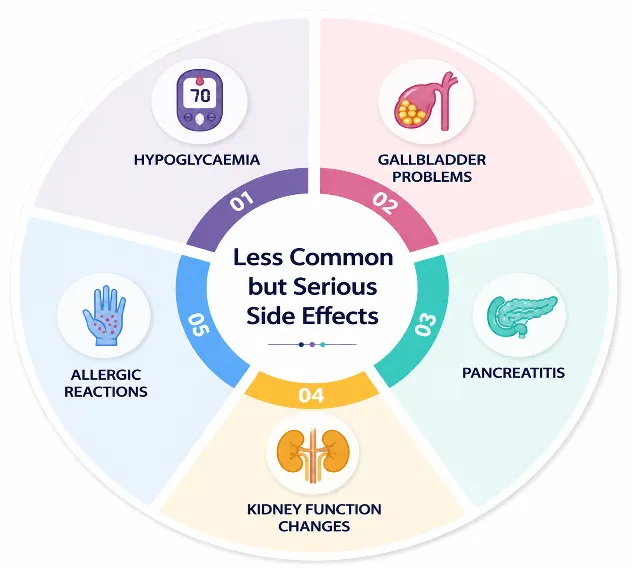
While most side effects are mild and manageable, a smaller number of patients experience effects that need prompt medical attention.
Hypoglycaemia (Low Blood Sugar):
The risk rises significantly when Mounjaro is combined with insulin or sulfonylureas, making it particularly important for patients with diabetes to have their overall diabetes treatment plan reviewed and adjusted alongside starting the medication.
Gallbladder Problems:
Rapid weight loss itself, not just the medication, can increase the risk of gallstones. Symptoms like sudden upper abdominal pain, especially after fatty meals, shouldn’t be ignored.
Pancreatitis:
Persistent, severe abdominal pain that may radiate to the back is a red flag that needs urgent evaluation, as inflammation of the pancreas is a recognised, though uncommon, risk with GLP-1 and GIP-based medications.
Kidney Function Changes:
Severe vomiting or diarrhoea can lead to dehydration, which in turn can affect kidney function, particularly in patients who already have reduced kidney reserve.
Allergic Reactions:
Rare but serious reactions, including facial swelling, difficulty breathing, or a widespread rash, require immediate medical care.
According to the U.S. Food and Drug Administration’s prescribing information, patients with a personal or family history of certain thyroid tumours should not use tirzepatide-based medications, which is one of several reasons a proper medical history matters before starting treatment.
Noticing side effects that feel more than “just adjusting”? It’s worth getting them checked rather than waiting them out. Book An Appointment
Who Should Be Extra Cautious with Mounjaro
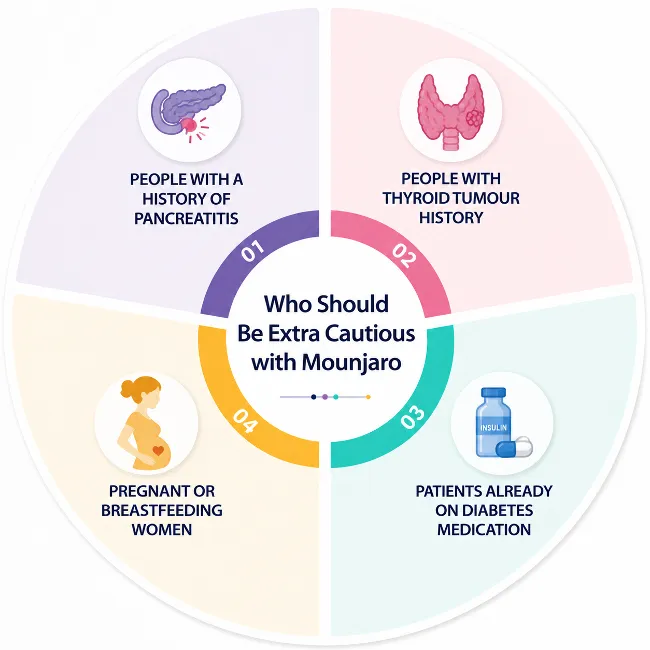
Certain patients need closer monitoring or may not be suitable candidates at all.
People with a History of Pancreatitis:
A prior episode of pancreatitis raises the threshold of caution needed before starting this class of medication.
People with Thyroid Tumour History:
A personal or family history of medullary thyroid carcinoma or MEN 2 syndrome is generally considered a reason to avoid tirzepatide-based treatment.
Patients Already on Diabetes Medication:
Those on insulin or sulfonylureas need their doses reviewed before starting Mounjaro to avoid dangerous drops in blood sugar, an evaluation for insulin resistance is often part of this review.
Pregnant or Breastfeeding Women:
Mounjaro is not recommended during pregnancy or breastfeeding, and women planning pregnancy should discuss timing with their doctor well in advance.
Managing Side Effects Safely
A few practical steps make a meaningful difference in how well Mounjaro is tolerated.
- Gradual Dose Titration: Increasing the dose slowly, rather than rushing to a higher one, is one of the most effective ways to reduce digestive side effects.
- Diet Adjustments: Smaller, more frequent meals with less fat and sugar tend to sit better than large or heavy meals, particularly in the first few weeks.
- Staying Hydrated: Adequate fluid intake helps offset the effects of reduced appetite and any diarrhoea or vomiting.
- Regular Follow-Up: Periodic review allows the treating doctor to catch problems early and adjust the dose or plan before side effects escalate, this is especially relevant when Mounjaro is being used alongside broader obesity and weight management care.
Mounjaro Treatment and Monitoring in Hubli Dharwad by Dr. Sandeep Donagaon

Dr. Sandeep Donagaon brings a DM in Endocrinology from Ramaiah Medical College, Bengaluru, along with the SCE in Endocrinology from the UK, and has treated thousands of patients at Dr. Sandeep’s Superspeciality Centre in Hubli. Weight-loss medications like Mounjaro are prescribed as part of an individualised plan that includes baseline testing, dose titration, and scheduled follow-up, backed by in-house lab and diagnostic facilities that make monitoring straightforward. You can read more about his training and approach, or browse further patient resources on the practice’s blog. Patients from Hubli, Dharwad, Belagavi, Gadag, Haveri, Davangere, and across North Karnataka come to the centre for supervised, safe weight-loss care.
“The medication does part of the job, but the plan around it, the dose, the diet, the follow-up, is what actually keeps patients safe and on track.” — Dr. Sandeep Donagaon
Thinking about Mounjaro or currently on it without regular follow-up? A structured review can help you use it safely and effectively. Book An Appointment
Frequently Asked Questions
What is the most common side effect of Mounjaro?
Nausea is the most frequently reported side effect, particularly in the first few weeks of treatment or shortly after a dose increase. It typically eases as the body adjusts.
Can Mounjaro cause serious side effects?
Yes, though uncommon. Pancreatitis, gallbladder problems, severe allergic reactions, and low blood sugar (especially when combined with other diabetes medication) are the main serious risks to watch for.
How long do Mounjaro side effects last?
Mild digestive side effects usually improve within a few weeks as the body adapts to a given dose. Symptoms often reappear briefly after each dose increase before settling again.
Is it safe to take Mounjaro without medical supervision?
No. Mounjaro should be started and adjusted under medical guidance, particularly for patients with diabetes, a history of pancreatitis, or thyroid tumour risk factors, since dosing and monitoring directly affect both safety and results.
Who should consult a doctor before starting Mounjaro?
Anyone with diabetes, a history of pancreatitis or gallbladder disease, a personal or family history of thyroid tumours, or who is pregnant or breastfeeding should have a detailed evaluation before starting treatment.
References
U.S. Food and Drug Administration — Mounjaro Prescribing Information: https://www.accessdata.fda.gov/drugsatfda_docs/label/2022/215866s000lbl.pdf
Cleveland Clinic — Tirzepatide (Mounjaro): https://my.clevelandclinic.org/health/drugs/24605-tirzepatide-injection
Disclaimer:
This blog is for educational purposes only and isn’t a substitute for professional medical advice. If you’ve been told you have prediabetes, please consult a qualified endocrinologist before starting a structured reversal plan.