

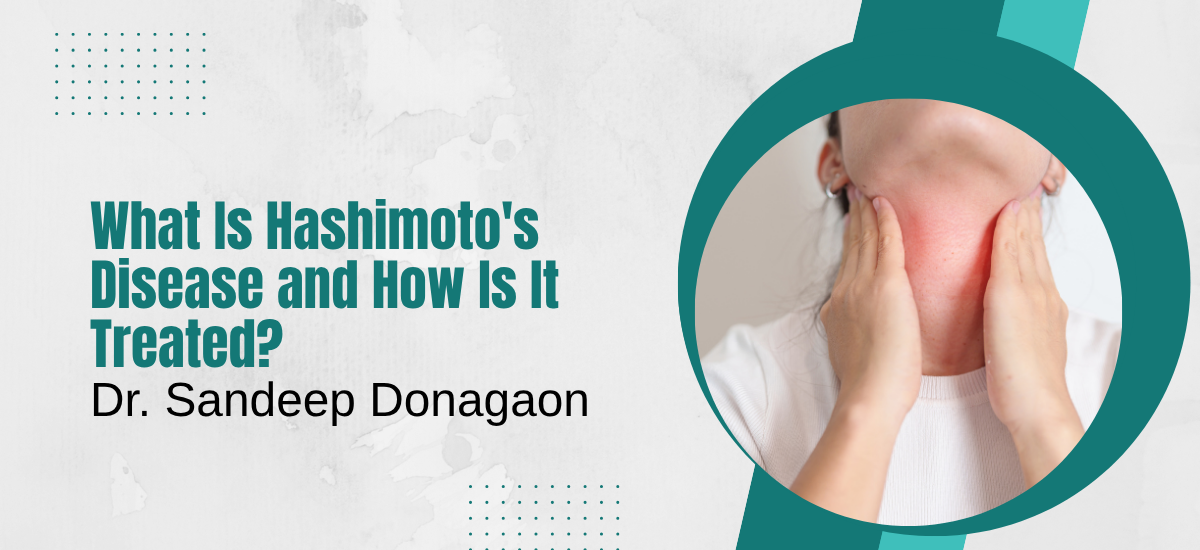
Hashimoto’s disease is an autoimmune condition where the immune system turns on the thyroid gland and slowly reduces its hormone output. It’s the leading cause of hypothyroidism in India, and it shows up in women far more than men. The decline is gradual. A person feels tired, gains weight, notices a swelling near the throat, and each of these gets explained away until a blood test finally connects the dots. Treatment can’t undo the autoimmune process. But it brings hormone levels back to normal, and for most people, that’s the part that matters.
According to Dr. Sandeep Donagaon, Endocrinologist in Hubli, Dharwad, “Patients often think they caused this somehow. They didn’t. The immune system misfires on its own, the thyroid slows in response, and once we replace what’s missing, most people are back to normal within weeks. It really comes down to one tablet and routine testing.”
What Causes Hashimoto's Disease?
No single trigger explains every case. A handful of factors tend to repeat though.
- Autoimmune attack: Antibodies form against thyroid tissue and chip away at hormone production over years, not days.
- Family history: Risk climbs sharply when a close relative already has thyroid or autoimmune disease.
- Hormonal shifts: Pregnancy, puberty and menopause often bring dormant antibodies to the surface.
- Gradual symptoms: Nothing about this arrives suddenly. That’s exactly why it gets missed.
And here’s the part most people don’t expect. Antibodies can be present for years while hormone levels stay completely normal, so one clean report doesn’t close the case. Our Thyroid Treatment page explains how diagnosis and dosing are actually handled at the clinic.
How Is Hashimoto's Disease Treated?
Once it’s diagnosed, treatment stays fairly consistent. Staying on schedule is what keeps it working.
- Hormone replacement: Levothyroxine does the job the thyroid can’t. Metabolism returns to normal within a few weeks of correct dosing.
- Finding the right dose: The first dose almost never sticks. Testing every six to eight weeks fine tunes it until levels hold steady.
- Ongoing checks: Testing spaces out to every six to twelve months once things settle. TSH stays the main marker, not antibodies.
- If symptoms don’t quit: A normal TSH with lingering fatigue calls for more digging, not automatically a bigger dose.
Because Hashimoto’s doesn’t go away, missed follow-ups are usually where things slip. Our blog on Hypothyroidism walks through what that looks like in practice.
Why Choose Dr. Sandeep Donagaon for Hashimoto's Treatment?
Dr. Sandeep Donagaon has spent over 10 years treating thyroid conditions, holding a DM in Endocrinology along with SCE in Endocrinology from the UK. Thousands of thyroid patients across Hubli-Dharwad have been treated by him, and the workup rarely ends at one TSH test. Antibody and free hormone levels are checked as standard, so a Hashimoto’s diagnosis is confirmed, never guessed. Dose changes follow how a patient feels day to day, not just what a report says.
So the earlier this gets caught, the shorter the road back to normal. He reviews every case personally before deciding on a plan. Call +91 8073047515 to book a consultation.
Fatigue that won’t lift or a swelling near the throat?
Frequently Asked Questions
Is Hashimoto's disease curable?
No cure exists, but hormone therapy keeps it controlled indefinitely.
Does Hashimoto's always turn into hypothyroidism?
Not always right away. Hormone levels can stay normal for years.
Can Hashimoto's affect pregnancy?
Yes, untreated cases raise the risk of miscarriage and complications.
How is Hashimoto's diagnosed?
TSH, free T4 and thyroid antibody tests together confirm the diagnosis.
References
- NIDDK — Hashimoto’s Disease
- MedlinePlus — Hashimoto Thyroiditis
Disclaimer:
This blog is meant for educational purposes and doesn’t replace professional medical advice. If fatigue, throat swelling or a family history of thyroid disease sounds familiar, please see a qualified endocrinologist for testing.