

If you have PCOS and feel like your belly fat behaves differently from anywhere else on your body, you’re not imagining it. Many women with Polycystic Ovary Syndrome find that abdominal fat accumulates faster, sits more stubbornly, and resists diet and exercise in a way that feels completely disconnected from how much effort they’re putting in. This isn’t a motivation problem. It’s a hormonal one.
Dr. Sandeep Donagaon, a leading endocrinologist in Hubli Dharwad at Dr. Sandeep’s Superspeciality Centre, explains that PCOS belly fat has a distinct underlying mechanism, driven largely by insulin resistance and elevated androgens, and that generic weight-loss advice often misses this entirely.
“PCOS belly fat isn’t just ‘extra weight.’ It behaves differently because the hormones driving it are different. Treating it the same way you’d treat ordinary weight gain usually leads to frustration, because the underlying insulin and androgen imbalance never gets addressed.”
— Dr. Sandeep Donagaon, Endocrinologist, Dr. Sandeep’s Superspeciality Centre, Hubli
Tired of belly fat that won’t budge no matter what you try? Let’s find out what’s actually driving it.
Why PCOS Causes Belly Fat in the First Place
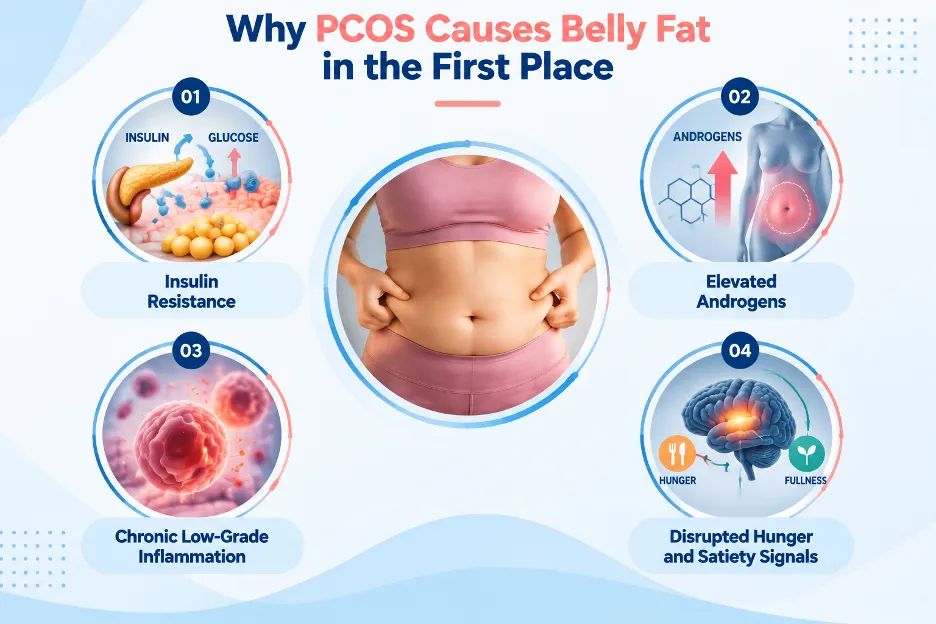
Understanding the mechanism behind PCOS belly fat is the first step toward actually addressing it, rather than fighting it with the wrong tools.
Insulin Resistance:
Insulin Resistance: Most women with PCOS have some degree of insulin resistance, meaning the body needs to produce more insulin to manage blood sugar. Elevated insulin levels directly promote fat storage, particularly around the abdomen, a pattern closely related to how diabetes develops and progresses when left unaddressed.
Elevated Androgens:
Higher levels of androgens (male hormones like testosterone) in PCOS shift fat storage patterns toward a more “central” or abdominal distribution, rather than the hips and thighs.
Chronic Low-Grade Inflammation:
PCOS is associated with low-grade inflammation, which can further worsen insulin resistance and make fat loss, especially around the midsection, more difficult.
Disrupted Hunger and Satiety Signals:
Hormonal imbalance can affect how the brain regulates hunger and fullness, making calorie control genuinely harder, not just a matter of willpower.
Why PCOS Belly Fat Is Harder to Lose Than Other Fat
This is the question that frustrates most patients the most, why does the same diet and exercise routine that works for others seem to do so little here?
- It’s Metabolically Different: Visceral fat (the deeper abdominal fat associated with PCOS) is more metabolically active and more resistant to typical calorie-deficit strategies than fat stored elsewhere.
- Insulin Resistance Creates a Cycle: High insulin promotes fat storage, and increased abdominal fat further worsens insulin resistance, creating a self-reinforcing loop that diet alone often can’t break.
- Generic Weight-Loss Plans Don’t Address the Root Cause: A standard low-calorie plan may produce modest results, but without addressing insulin resistance and hormonal imbalance directly, the belly fat component tends to be the last, and hardest, area to respond. This is why a proper obesity and weight-loss evaluation looks well beyond calories alone.
How to Get Rid of PCOS Belly: What Actually Helps
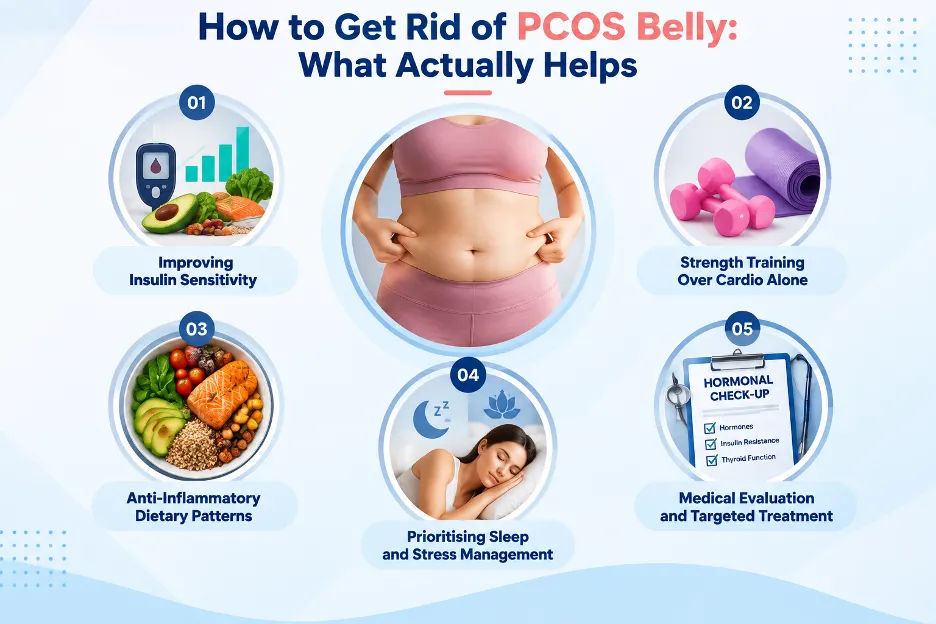
Addressing PCOS belly fat effectively means targeting the hormonal root cause alongside lifestyle changes, not relying on lifestyle changes in isolation.
Improving Insulin Sensitivity:
This is often the single most impactful step. Reducing refined carbohydrates and sugar, prioritising fibre and protein, and in some cases using medication like metformin can meaningfully improve insulin resistance, which directly affects abdominal fat storage.
Strength Training Over Cardio Alone:
Building muscle mass improves insulin sensitivity more effectively than cardio alone, making resistance training a particularly valuable tool for PCOS-related belly fat specifically.
Anti-Inflammatory Dietary Patterns:
A diet rich in whole foods, healthy fats, and lower in processed sugar can help reduce the chronic inflammation that worsens insulin resistance and abdominal fat retention.
Prioritising Sleep and Stress Management:
Poor sleep and chronic stress raise cortisol, which further promotes abdominal fat storage and can worsen insulin resistance, making this an often-overlooked but important piece of the puzzle.
Medical Evaluation and Targeted Treatment:
For many women, lifestyle changes alone aren’t enough because the hormonal imbalance itself needs direct treatment. A proper evaluation of insulin resistance, androgen levels, and thyroid function through hormonal treatment often uncovers what’s actually driving the fat storage pattern.
Dr. Sandeep Donagaon notes:
“The women who see the most meaningful change in PCOS belly fat are almost always the ones who get their insulin resistance and hormone levels properly evaluated first, rather than starting with diet alone and hoping it works.”
Ready to stop guessing and start addressing the actual cause? A proper hormonal evaluation can change everything.
The Role of Weight-Loss Medication in PCOS Belly Fat
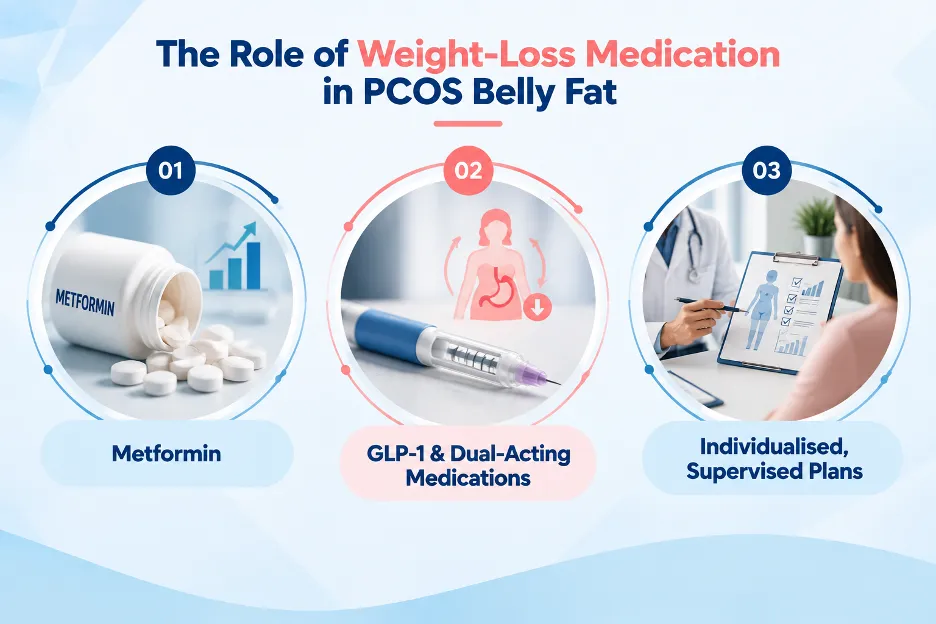
For some patients, particularly those with more pronounced insulin resistance or obesity alongside PCOS, medically supervised weight-loss treatment can be an important part of the plan.
Metformin:
Widely used to improve insulin sensitivity in PCOS, metformin can help reduce the insulin-driven fat storage pattern over time, alongside lifestyle changes.
GLP-1 and Dual-Acting Medications:
Newer medications that support appetite regulation and metabolic function are increasingly used in PCOS-related weight management, always under medical supervision and dose titration, supported by the in-house lab and diagnostic facilities at the centre.
Individualised, Supervised Plans:
Because PCOS involves multiple overlapping hormonal factors, weight-loss treatment works best as part of a broader, personalised plan rather than a standalone prescription. Structured obesity and weight-loss care typically combines medical evaluation, dose titration, and regular follow-up.
According to the National Institutes of Health, insulin resistance is present in a majority of women with PCOS, regardless of body weight, and addressing it directly is considered central to managing PCOS-related weight gain and its associated health risks.
Other Health Risks Linked to PCOS Belly Fat
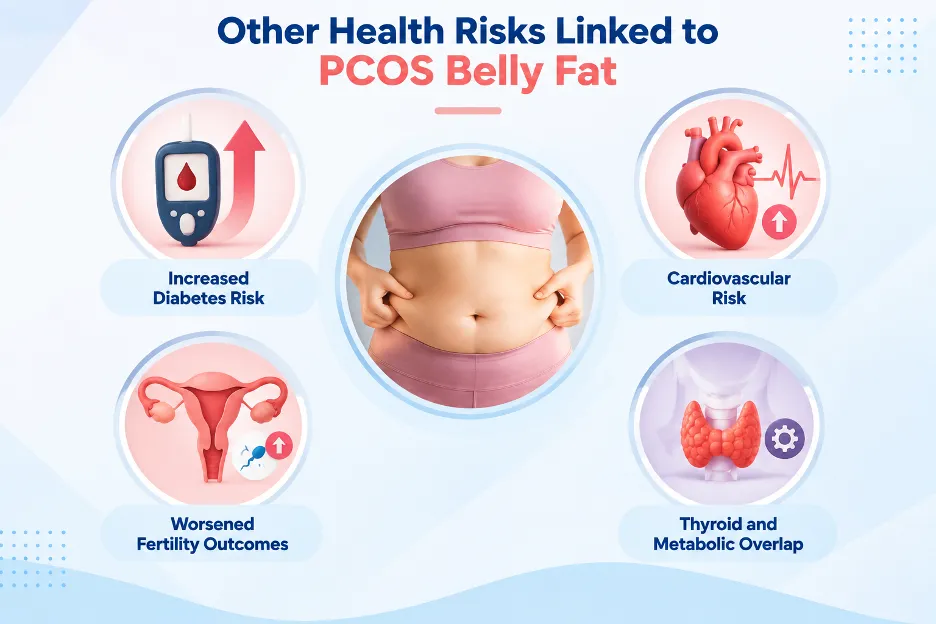
PCOS belly fat isn’t purely a cosmetic concern, it’s also linked to broader metabolic health risks that make addressing it genuinely important.
Increased Diabetes Risk:
Central obesity in PCOS significantly raises the long-term risk of developing type 2 diabetes, making early evaluation and management valuable.
Cardiovascular Risk:
Visceral abdominal fat is associated with higher cardiovascular risk factors, including elevated cholesterol and blood pressure.
Worsened Fertility Outcomes:
Because abdominal fat and insulin resistance are closely linked to hormonal imbalance, addressing PCOS belly fat can also meaningfully improve ovulation and fertility outcomes, an overlap sometimes explored further alongside pregnancy-related diabetes care for women planning conception.
Thyroid and Metabolic Overlap:
PCOS symptoms can sometimes overlap with or be worsened by underlying thyroid dysfunction, which is why a broader hormonal workup, including thyroid evaluation, is often part of a complete assessment.
PCOS Belly Fat Management in Hubli Dharwad by Dr. Sandeep Donagaon
Dr. Sandeep Donagaon brings a DM in Endocrinology from Ramaiah Medical College, Bengaluru, along with the SCE in Endocrinology from the UK, and has treated thousands of patients at Dr. Sandeep’s Superspeciality Centre in Hubli. His approach to PCOS belly fat starts with identifying the actual hormonal drivers, insulin resistance, androgen levels, and thyroid function, before recommending a treatment plan, supported by in-house lab and diagnostic facilities for streamlined, accurate testing. Patients from Hubli, Dharwad, Belagavi, Gadag, Haveri, Davangere, and across North Karnataka come to the centre for individualised, evidence-based PCOS and metabolic care.
“PCOS belly fat responds to the right plan, but that plan has to start with understanding what’s actually happening hormonally in each patient, not a one-size-fits-all diet sheet.”
— Dr. Sandeep Donagaon
Stop fighting your hormones alone. Get a personalised plan built around your actual PCOS profile.
Conclusion
PCOS belly fat is driven by insulin resistance, elevated androgens, and chronic low-grade inflammation, not simply calorie intake, which is why generic diet and exercise plans often fall short on their own. A combination of targeted lifestyle changes, strength training, and, where needed, medical treatment aimed at the underlying hormonal imbalance offers the most reliable path to meaningful, lasting change. Getting a proper hormonal evaluation is usually the step that makes the biggest difference.
Frequently Asked Questions
Why is PCOS belly fat so hard to lose compared to other fat?
PCOS belly fat is driven by insulin resistance and elevated androgens, which promote fat storage specifically around the abdomen and make it more resistant to typical diet and exercise approaches than other fat.
Can PCOS belly fat be reduced without medication?
Yes, for many women, lifestyle changes like improved diet, strength training, and better sleep can meaningfully help. However, those with significant insulin resistance often see better results when lifestyle changes are combined with medical treatment.
Does exercise alone fix PCOS belly fat?
Exercise helps, particularly strength training, but it works best alongside dietary changes and, when needed, treatment targeting insulin resistance, since exercise alone rarely resolves the underlying hormonal driver.
How long does it take to lose PCOS belly fat?
This varies by individual, but with a properly targeted plan addressing insulin resistance and hormonal imbalance, most patients start noticing meaningful changes within a few months of consistent treatment.
Should I see a doctor for PCOS belly fat, or just try dieting first?
A medical evaluation is strongly recommended before starting any plan, since understanding your specific insulin resistance and hormone levels helps determine which approach will actually work for you, rather than relying on trial and error.
References:
National Institutes of Health — Insulin Resistance and PCOS: https://pmc.ncbi.nlm.nih.gov/articles/PMC12653357/
Cleveland Clinic — Polycystic Ovary Syndrome (PCOS): https://my.clevelandclinic.org/health/diseases/8316-polycystic-ovary-syndrome-pcos