

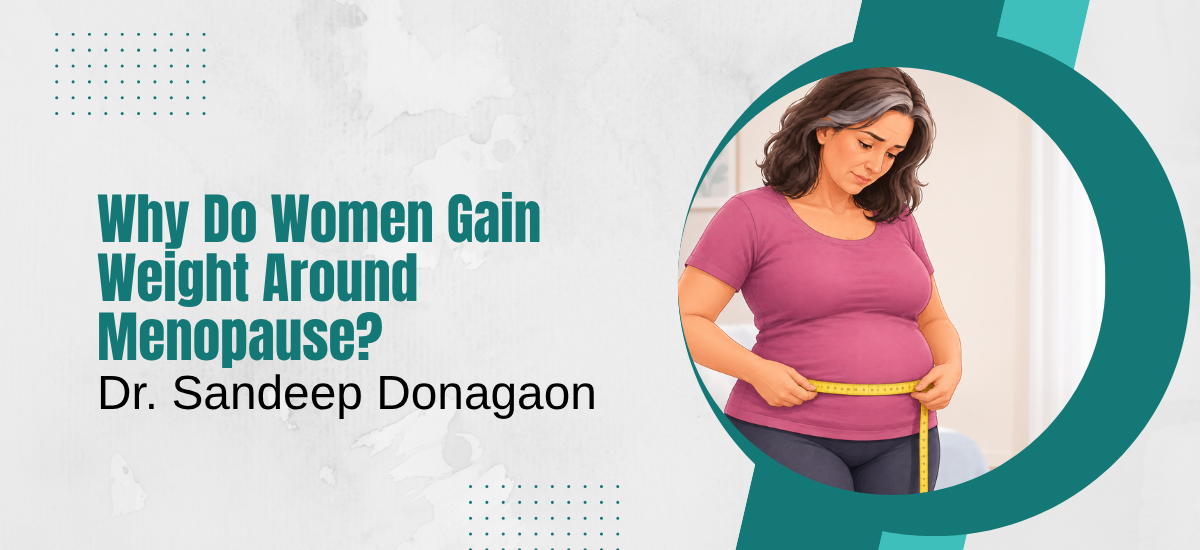
Falling estrogen is the main reason. As levels drop, body composition changes, metabolism slows down, and fat that once settled on the hips and thighs starts collecting around the abdomen instead. The frustrating part is that eating habits often haven’t changed at all. Same diet, same routine, different result on the scale. Menopause weight gain is a hormonal shift first, a lifestyle issue second, which is why the usual advice tends to fall flat.
According to Dr. Sandeep Donagaon, an Endocrinologist Hubli Dharwad, “Women come in blaming themselves for gaining eight or ten kilos without changing anything. That’s not a discipline problem. The hormones that used to regulate where fat went and how fast it burned are simply no longer there in the same quantity.”
What Actually Causes Menopause Weight Gain?
Several things shift at once here. None of them act alone.
- Estrogen decline: This hormone influences where the body stores fat. As it falls, storage moves from hips and thighs toward the abdomen, which carries higher metabolic risk.
- Muscle loss: Lean muscle drops steadily with age, and muscle burns more calories at rest than fat does. Less muscle, slower baseline metabolism.
- Insulin changes: Cells respond less efficiently to insulin during this phase, making fat storage easier and fat loss harder.
- Sleep disruption: Hot flashes and broken sleep raise cortisol. Cortisol pushes appetite up and abdominal fat storage along with it.
So the same calorie intake now produces a different outcome, which is exactly why generic diet advice disappoints. A proper Weight Loss Solution at this stage starts with hormone and metabolic testing, not a meal plan handed out blind.
How to Lose Weight During Menopause Without Extreme Dieting?
Severe restriction backfires here. It accelerates muscle loss, which is the opposite of what’s needed.
- Protein first: Higher protein intake protects muscle mass during weight loss. This matters more now than it did at thirty.
- Resistance training: Two or three sessions a week rebuild what age is taking away. Cardio alone won’t do it.
- Rule out thyroid issues: Hypothyroidism is common in this age group and produces near-identical symptoms. Worth testing before assuming it’s menopause.
- Fix the sleep: Treating hot flashes and improving sleep quality does more for weight than another round of dieting.
Because abdominal fat and poor insulin response feed each other, this whole picture connects back to insulin resistance. Address that mechanism and the weight becomes far easier to move.
Why Choose Dr. Sandeep Donagaon for Menopause Weight Management?
Dr. Sandeep Donagaon brings over 10 years of experience in hormonal and metabolic care across Hubli-Dharwad, with a DM in Endocrinology and SCE in Endocrinology from the UK. Weight gain during menopause gets investigated properly here. Thyroid function, insulin response, and hormone levels are checked before any plan is built, because treating the wrong cause wastes months.
Because this stage brings real metabolic change, plans need to account for it rather than ignore it. Dr. Sandeep Donagaon reviews each case personally to identify what’s actually driving the gain. Call +91 8073047515 to book a consultation.
Gaining weight since menopause started and nothing seems to help?
Frequently Asked Questions
Is menopause weight gain permanent?
No. It’s harder to reverse, but manageable with the right approach.
Why does fat move to the belly during menopause?
Falling estrogen shifts fat storage from the hips toward the abdomen.
Does HRT help with menopause weight gain?
It can help with fat distribution, though it isn’t a weight loss treatment.
How much weight do women typically gain?
Most gain around 2 to 5 kilos across the menopause transition.
Disclaimer:
This blog is for educational purposes only and is not a substitute for professional medical advice. Please consult a qualified healthcare professional for guidance specific to your circumstances.