


Do you find it increasingly difficult to lose fat in the belly region? Despite eating healthy and being physically active, many people find it hard to reduce belly fat. Though lifestyle factors do matter, hormones might also play an essential role in fat accumulation and weight loss.
Insulin, cortisol, thyroid hormones, and sex hormones regulate metabolism, appetite, blood sugar levels, and fat storage in the body. Any imbalance in these hormones could lead to fat deposition in the body, especially around the waist region. Such a belly is often termed a hormonal belly.
As Dr. Sandeep Donagaon says, “Sometimes weight gain is not because of calories consumed. For some patients, hormonal disturbances interfere with metabolism and create difficulties in managing weight. It is imperative to identify the cause of weight gain so that we can adopt appropriate treatment methods.”
Dr. Sandeep Donagaon is an Endocrinologist in Hubli-Dharwad, having extensive experience treating hormonal and metabolic conditions. He takes a personalized approach in dealing with thyroid disorders, diabetes, obesity, and other hormone-related problems at Dr. Sandeep’s Superspeciality Center.
Why is your belly fat growing regardless of all your attempts to control it? Learn more about the hormonal belly and why it develops.
What Is Hormonal Belly?

The hormonal belly is the growth of excess fat in the abdominal area caused by an imbalance of hormones affecting metabolism and fat deposition. Unlike ordinary weight gain, the hormonal belly can develop even if the person has a healthy lifestyle and exercises regularly.
The hormones control various body processes such as hunger, blood sugar level, energy expenditure and fat deposition. In case of hormonal imbalance, the body will start storing more fat in the waist area.
Controlling hormonal belly starts with understanding the reason for the development of excess weight.
Wondering what could be making belly fat harder to lose? Let’s look at the common hormonal factors that may be contributing to it.
What Causes Hormonal Belly?
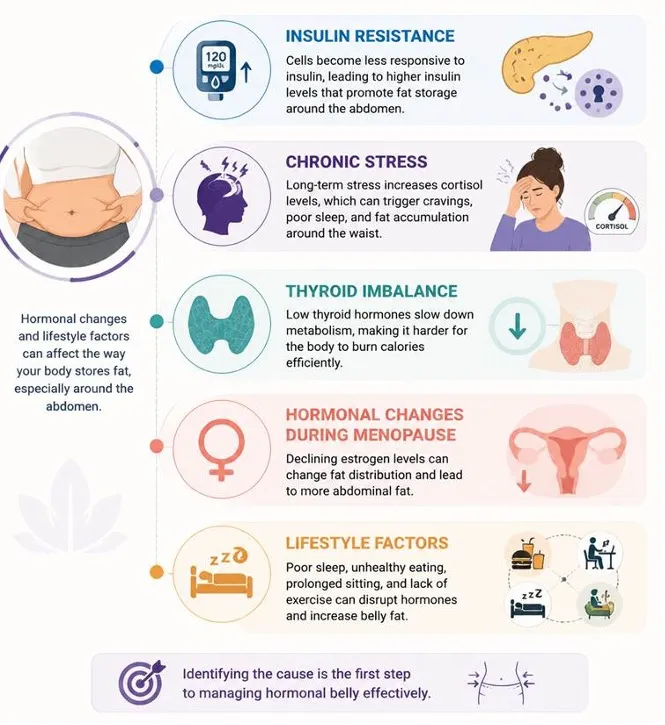
Identifying these causes can help you understand why weight changes are happening and guide the right management approach.
Is your belly fat becoming hard to shed? Here are some signs that can give away why hormones are at play here.
Signs Your Belly Fat Is Hormonal (Not Just Because of Poor Diets)
Some signs may suggest that there is a hormonal problem behind it all.
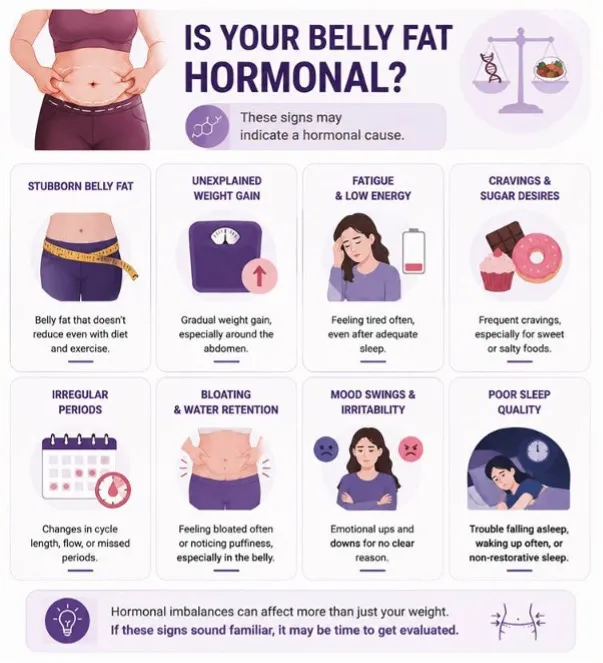
Some of the issues that require attention include:
• Can’t get rid of belly fat even when you eat and live healthily
• Sudden weight gain without a change in lifestyle
• Fatigue or lack of energy
• Excessive hunger and sugar cravings
• An irregular menstrual cycle
• Mood swings and bad sleep
• Being cold most of the time
These signs can indicate that there is an underlying cause behind your belly fat. Proper evaluation can help you pick an appropriate solution.
What is the way to find out whether hormones affect your weight? Let’s see how doctors diagnose the reasons for belly fat.
How Is Hormonal Belly Diagnosed?

Generally, the diagnosis starts with the examination of your medical history and other factors.
Dr. Sandeep Donagaon might ask you to undergo:
• Glucose and insulin level check
• Thyroid hormone testing
• Cortisol level check if required
• Hormone profile assessment
• Weight, BMI, and metabolism evaluation
It will help to distinguish ordinary obesity from hormonal belly fat.
Can hormonal belly be improved with the right approach? Let’s explore the treatment options that can help restore better balance.
Treatment Options for Hormonal Belly
The treatment of a hormonal belly is highly individualised depending on the cause of the condition. It includes improving metabolism, correcting hormonal issues and building healthy routines.
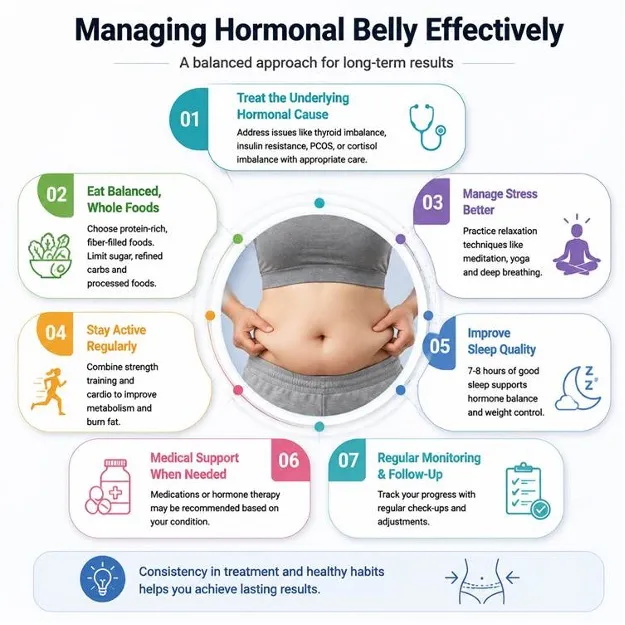
Many people can manage to improve their metabolism and lose extra pounds.
Why does belly fat change during certain stages of life? Let’s understand how conditions like menopause, PCOS, and thyroid problems can affect weight.
Hormonal Belly in Special Situations
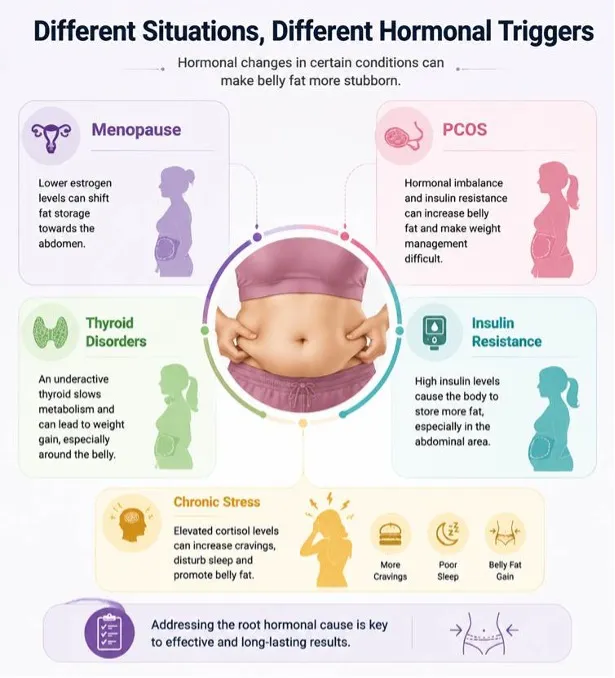
A deeper comprehension of the underlying cause of weight gain enables planning treatment for specific health circumstances.
Is your belly fat a sign of an underlying health concern? Let’s understand when expert advice can help you find the right solution.
When Should You Consult An Endocrinologist for Belly Fat?
Not every case of belly fat requires medical treatment. However, certain situations may need evaluation by an endocrinologist.
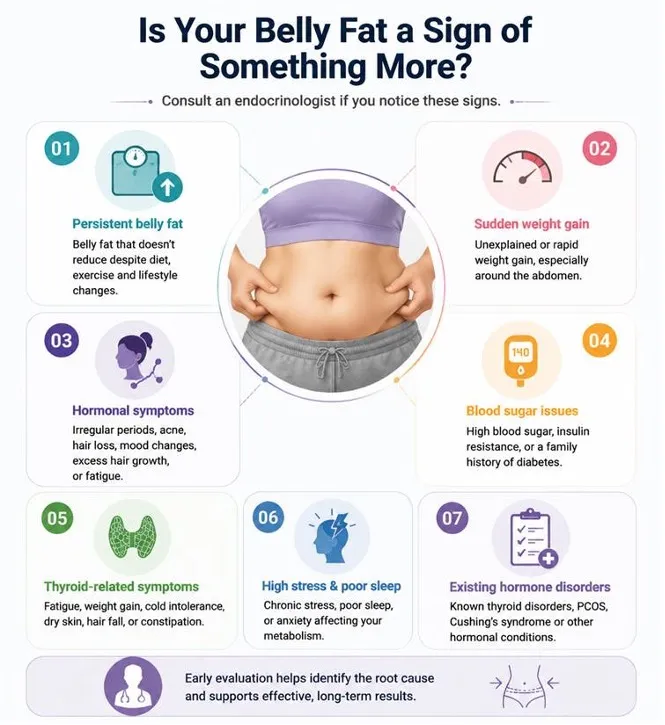
It may be time to consult an endocrinologist if:
• Weight gain happens suddenly
• Belly fat increases despite lifestyle changes
• You have symptoms of thyroid imbalance
• Blood sugar levels are elevated
• You experience hormonal symptoms along with weight changes
An endocrinologist can evaluate whether hormones are affecting your metabolism and recommend suitable treatment.
Need help managing belly fat associated with hormones? Here is how Dr. Sandeep Donagaon treats hormonal and metabolic issues.
Hormonal Belly Treatment in Hubli Dharwad by Dr. Sandeep Donagaon
Being a seasoned Endocrinologist in Hubli-Dharwad, Dr. Donagaon focuses on analyzing the factors influencing metabolism, instead of providing weight loss solutions for the short term. His areas of specialization include thyroid problems, diabetes, obesity, and other such endocrine problems.
Through his Superspeciality Clinic, Dr. Sandeep Donagaon provides individualized advice to people suffering from various conditions, including obesity, insulin resistance, thyroid problems and other such endocrine problems.
Take control of your hormonal health with expert guidance. Connect with a specialist to identify the cause behind belly fat and guide you toward sustainable solutions.
Frequently Asked Questions
1. How to get rid of hormonal belly?
Managing hormonal belly involves identifying the cause and improving factors such as diet, exercise, sleep, stress and hormonal balance.
2. Can hormones cause belly fat?
Yes. Hormones like insulin, cortisol, thyroid hormones and reproductive hormones can influence fat storage around the abdomen.
3. Is hormonal belly different from normal belly fat?
Yes. Hormonal belly is linked to hormonal or metabolic changes that may make abdominal fat harder to reduce.
4. Can hormonal belly be reversed?
In many cases, improving hormonal balance and lifestyle habits can significantly reduce abdominal fat.
5. When should I see an endocrinologist for belly fat?
Consult an endocrinologist if belly fat is persistent, unexplained, or accompanied by hormonal symptoms.
Disclaimer:
This blog is for educational purposes only and isn’t a substitute for professional medical advice. If you’ve been told you have prediabetes, please consult a qualified endocrinologist before starting a structured reversal plan.