

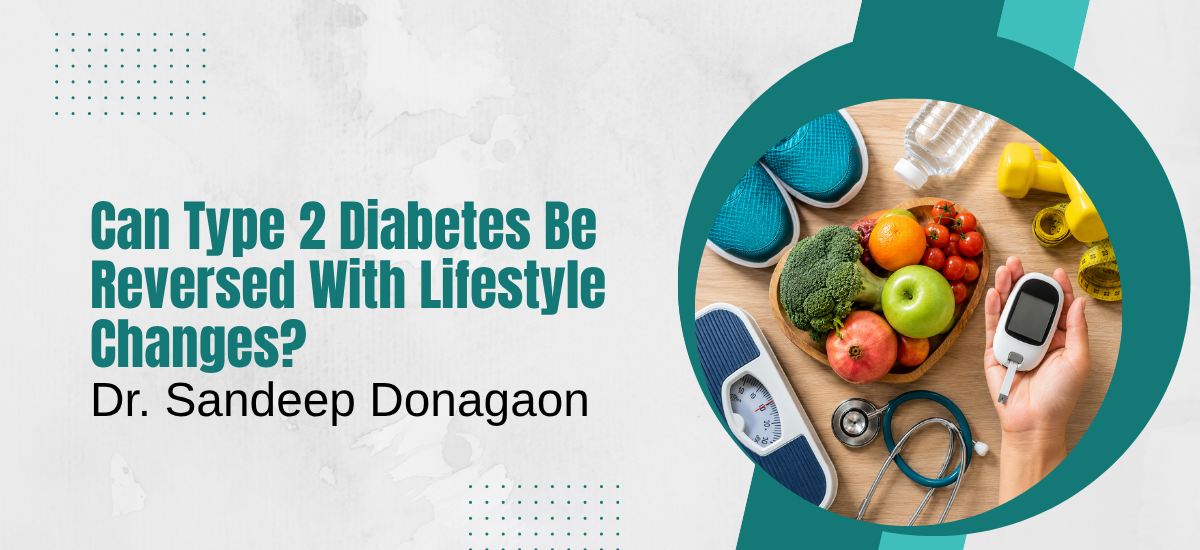
Yes, in many cases it can. Doctors call it remission rather than a cure, since blood sugar returns to healthy levels without medication, though the underlying tendency never fully goes away. Most patients need to lose 10% to 15% of their body weight through diet and exercise to get there. Timing matters just as much. Remission is far more achievable when changes start early, soon after diagnosis, before the pancreas has taken years of quiet damage.
According to Dr. Sandeep Donagaon, Endocrinologist in Hubli, Dharwad, “Patients hear the word remission and assume it means cured forever. It doesn’t quite work that way. What it means is the body can manage sugar on its own again, as long as the weight stays off and the habits stick. Slip on both, and the numbers slip right back with them.”
How Does Weight Loss Reverse Type 2 Diabetes?
The link between weight and blood sugar isn’t about looking fit. It’s mechanical.
- Fat around the pancreas and liver: Excess fat sitting in these organs blocks insulin from doing its job. Losing even a modest amount clears space for it to work again.
- Insulin sensitivity improves: Cells that once ignored insulin start responding again once weight drops. Readings often improve within weeks, not months.
- Muscle mass matters: Exercise builds muscle, and muscle pulls glucose straight out of the blood. Simple mechanism. Real effect.
- The 15% mark: Research keeps pointing to this range as where remission becomes realistic for most people. Below it, results turn patchy.
And this is where the diagnosis stage becomes important. Someone caught at prediabetes or in year one of Type 2 has a much easier path than someone managing it for a decade, which is exactly why early Diabetes Treatment matters more than people realize.
What Does a Realistic Remission Plan Look Like?
There’s no single formula for this. But certain elements show up in nearly every successful case.
- Structured diet, not fads: Calorie reduction built around whole foods holds up far better long term than extreme or short-lived diets.
- Regular movement: Thirty minutes most days does it. Walking counts.
- Medical supervision: Medication doses often need adjusting as sugar improves, so this isn’t a solo project.
- Ongoing monitoring: HbA1c and glucose checks don’t stop once numbers look good, they’re what confirm the improvement is actually holding.
Weight loss gets most of the credit for remission, but it’s not doing all the work alone. Underneath it sits insulin resistance treatment, the actual mechanism that keeps blood sugar high in the first place, and fixing that is what makes the rest of the plan stick.
Why Choose Dr. Sandeep Donagaon for Diabetes Reversal Support?
Dr. Sandeep Donagaon brings over 10 years of experience managing diabetes across Hubli-Dharwad, holding a DM in Endocrinology with SCE in Endocrinology from the UK. His approach to remission isn’t a diet handout and a goodbye. It includes structured monitoring, medication tapering when it’s safe to do so, and goals set around where each patient is actually starting from. Progress gets tracked with real numbers, not guesswork.
Because early intervention makes the biggest difference here, and that window doesn’t stay open forever. He reviews each case personally to see what remission could realistically look like for that patient. Call +91 8073047515 to book a consultation.
Recently diagnosed and want a real shot at reversing it?
Frequently Asked Questions
Is Type 2 diabetes remission permanent?
Not necessarily. It holds only for as long as the weight and habits are maintained.
How much weight loss is needed for remission?
Generally 10% to 15% of body weight, though this varies from person to person.
Can medication be stopped once remission happens?
In some cases, yes, but only under a doctor’s supervision while tapering off.
Does remission work for long-term diabetics too?
It’s tougher to achieve, though still possible with consistent lifestyle changes.
Disclaimer:
This blog is for educational purposes only and isn’t a substitute for professional medical advice. If you’ve been diagnosed with Type 2 diabetes and want to explore remission, please consult a qualified endocrinologist before making major changes to medication or diet.