

If you’ve been feeling constantly tired, gaining or losing weight without explanation, dealing with mood swings, irregular periods, or skin and hair changes that don’t make sense, a hormonal imbalance could be behind it. Hormones control nearly every major function in the body, from metabolism and energy to mood, sleep, and reproduction, so even a small shift can ripple across several systems at once.
Dr. Sandeep Donagaon, a leading endocrinologist in Hubli Dharwad at Dr. Sandeep’s Superspeciality Centre, sees patients every week whose symptoms have been dismissed as stress or ageing for years before the real hormonal cause is identified. His approach to hormonal treatment starts with pinpointing exactly which hormone, or combination of hormones, is out of range, rather than treating symptoms in isolation.
“Hormonal imbalance is rarely just one thing. The thyroid, adrenal glands, pituitary, and reproductive hormones are all interconnected, so a proper workup has to look at the whole picture, not just the one test a patient walks in asking about.” — Dr. Sandeep Donagaon, Endocrinologist, Dr. Sandeep’s Superspeciality Centre, Hubli
Feeling off but can’t pinpoint why? Persistent fatigue, weight changes, or mood shifts deserve a proper hormonal evaluation, not guesswork.
What Causes Hormonal Imbalance?

Hormonal imbalance happens when a gland produces too much or too little of a hormone, or when the body’s hormone receptors stop responding normally. Because hormones work in tightly linked feedback loops, an imbalance in one gland often affects several others.
Common causes include: Thyroid dysfunction (hypothyroidism or hyperthyroidism) Adrenal gland disorders, including excess or insufficient cortisol Pituitary gland problems, since the pituitary regulates most other hormone-producing glands PCOS and other reproductive hormone imbalances Chronic stress, poor sleep, and significant weight changes Certain medications and, in some cases, hormone-secreting tumours
Age and life stage also play a major role. Puberty, pregnancy, postpartum recovery, and perimenopause are all periods of natural hormonal flux, but they can also unmask an underlying imbalance that needed attention all along.
Common Symptoms of Hormonal Imbalance

Symptoms vary depending on which hormone is affected, but certain patterns show up again and again in clinical practice.
Fatigue and Low Energy: Persistent tiredness that doesn’t improve with rest is one of the most common complaints, often linked to thyroid or adrenal imbalance.
Unexplained Weight Changes: Sudden weight gain or difficulty losing weight despite diet and exercise frequently points to thyroid dysfunction or insulin resistance, and is closely tied to broader obesity and weight management concerns.
Irregular Periods or Fertility Issues: Hormonal shifts involving oestrogen, progesterone, thyroid hormones, or insulin can disrupt the menstrual cycle and reduce fertility, particularly in women with PCOS.
Mood Changes and Brain Fog: Anxiety, low mood, irritability, and difficulty concentrating are commonly linked to thyroid and cortisol imbalances, and are often mistaken for purely psychological issues.
Skin, Hair, and Sleep Changes: Dry skin, hair thinning, excessive sweating, or disrupted sleep patterns can all trace back to an underlying hormonal cause rather than a standalone problem.
How Hormonal Imbalance Is Diagnosed
Accurate diagnosis is the foundation of effective treatment, and it starts with looking well beyond a single blood test.
Detailed Clinical History: A thorough discussion of symptoms, their timeline, family history, and any recent life changes helps narrow down which hormonal system is likely involved.
Targeted Blood Tests: Depending on the suspected cause, testing may include TSH, Free T3 and T4, cortisol, insulin and fasting glucose, and reproductive hormones like LH, FSH, and testosterone. Patients with thyroid-specific symptoms often benefit from a focused thyroid evaluation as part of this workup.
Imaging When Needed: Ultrasound, CT, or MRI may be used to evaluate the thyroid, adrenal glands, or pituitary gland if a structural cause, such as a nodule or tumour, is suspected.
Bone and Metabolic Screening: Since long-standing hormonal imbalance can affect bone density and metabolic health, additional screening for conditions like osteoporosis or diabetes is often included in a complete evaluation.
According to the Endocrine Society, hormonal disorders are frequently underdiagnosed because symptoms overlap with common, non-specific complaints, making a structured, test-based approach essential rather than relying on symptoms alone.
Noticing more than one of these symptoms together? That overlap is often the clue that points to a hormonal cause.
Treatment Options for Hormonal Imbalance
Treatment is always matched to the specific hormone involved and the severity of the imbalance, ranging from lifestyle adjustments to medication and, in select cases, surgical referral.
Medication-Based Correction: Thyroid hormone replacement, anti-thyroid medication, or cortisol-regulating drugs are used to bring hormone levels back into a healthy range, with dosing adjusted based on regular follow-up testing.
Lifestyle and Dietary Changes: Balanced nutrition, regular physical activity, adequate sleep, and stress management play a direct role in hormonal balance, particularly for insulin and cortisol-related imbalances. These changes work alongside, not instead of, medical treatment when hormone levels are clearly abnormal.
Treating the Underlying Condition: When hormonal imbalance stems from a specific condition, such as PCOS, diabetes, or a pituitary or adrenal growth, treatment is directed at that root cause. Patients with insulin-related imbalance often need coordinated diabetes treatment alongside hormonal correction for the best results.
Long-Term Monitoring: Hormone levels are rechecked at regular intervals after any dose change, and then periodically once stable, since needs can shift with age, weight changes, pregnancy, or new medications.
Hormonal Imbalance in Special Situations
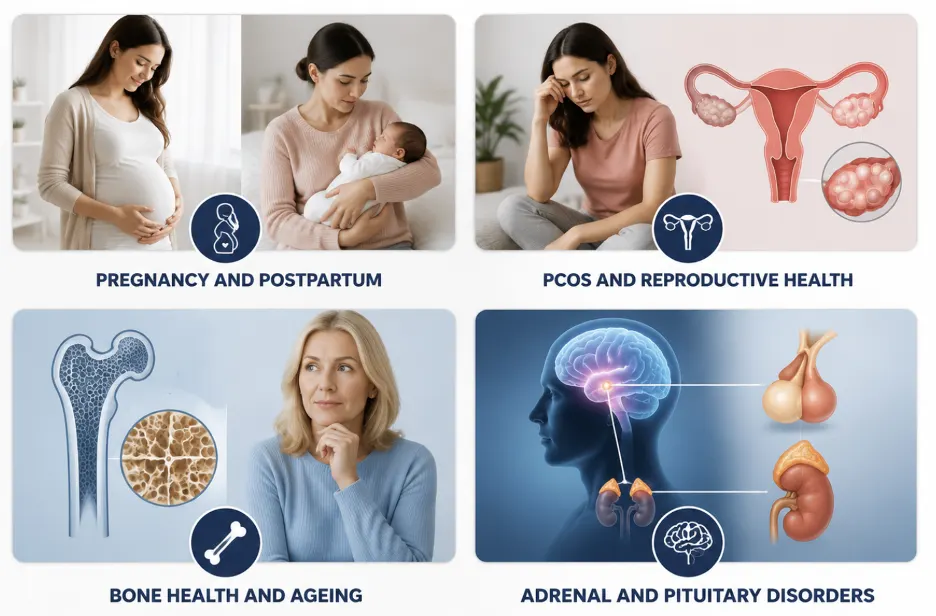
Certain groups need a more tailored approach to hormonal evaluation and treatment.
Pregnancy and Postpartum: Hormonal shifts during pregnancy and after delivery can affect both the mother and baby if left unmanaged, making timely testing and treatment essential during this window.
PCOS and Reproductive Health: Polycystic ovary syndrome involves multiple overlapping hormonal imbalances affecting insulin, androgens, and ovulation, and often requires a combined approach to improve periods, weight, and fertility.
Bone Health and Ageing: Long-standing hormonal imbalance, particularly involving thyroid or reproductive hormones, can silently weaken bone density over time. Patients with risk factors are often advised to get evaluated for bone density loss alongside their hormonal workup.
Adrenal and Pituitary Disorders: Less common but more complex, imbalances originating in the adrenal or pituitary glands need specialist-level evaluation and, occasionally, coordination with other specialists for complete management.
When to See an Endocrinologist
While mild, occasional symptoms may not need specialist input, certain signs call for a proper endocrine evaluation: Fatigue, weight change, or mood shifts that persist for weeks Irregular periods or difficulty conceiving Unexplained hair loss, skin changes, or excessive sweating Family history of thyroid, diabetes, or hormonal disorders Symptoms that continue despite a “normal” single test result
A specialist looks at how different hormonal systems interact, rather than treating one number in isolation.
Hormonal Imbalance Care in Hubli Dharwad by Dr. Sandeep Donagaon
Dr. Sandeep Donagaon brings a DM in Endocrinology from Ramaiah Medical College, Bengaluru, along with the SCE in Endocrinology from the UK, and has treated over 4,000 patients at Dr. Sandeep’s Superspeciality Centre in Hubli. His practice is built around detailed diagnosis, individualised treatment plans, and consistent follow-up, backed by in-house lab and diagnostic facilities that reduce delays in getting answers. You can learn more about his training and approach or read through additional patient resources on the practice’s blog. Patients from Hubli, Dharwad, Belagavi, Gadag, Haveri, Davangere, and across North Karnataka come to the centre for a clear, complete evaluation of their hormonal health.
“A woman or man whose main test looks normal but who still feels unwell is telling us something important. The job isn’t done until we find out what that is.” — Dr. Sandeep Donagaon
Already diagnosed but still not feeling like yourself? A structured review of your treatment plan can make a real difference.
Frequently Asked Questions
1. What are the early signs of hormonal imbalance?
Early signs often include persistent fatigue, unexplained weight changes, mood swings, irregular periods, and changes in sleep or skin. These symptoms are easy to dismiss individually but worth evaluating together.
2. Can hormonal imbalance be treated without medication?
Mild imbalances, particularly those linked to stress, sleep, or diet, can sometimes improve with lifestyle changes alone. However, clearly abnormal hormone levels usually need medication alongside lifestyle correction.
3. How long does it take to correct a hormonal imbalance?
This varies by cause. Some imbalances improve within weeks of starting treatment, while others, especially chronic thyroid or reproductive hormone issues, need months of monitoring and dose adjustment.
4. Can hormonal imbalance affect fertility?
Yes. Thyroid, insulin, and reproductive hormone imbalances are common, treatable causes of reduced fertility in both men and women.
5. Who is the best endocrinologist for hormonal imbalance in Hubli Dharwad?
Dr. Sandeep Donagaon at Dr. Sandeep’s Superspeciality Centre, Hubli, is a highly experienced endocrinologist offering complete diagnosis and structured treatment for thyroid, adrenal, pituitary, and reproductive hormone imbalances across North Karnataka.
References
- Endocrine Society — Hormone Health Network: https://www.hormone.org/
- Cleveland Clinic — Hormonal Imbalance: https://my.clevelandclinic.org/health/diseases/22673-hormonal-imbalance