

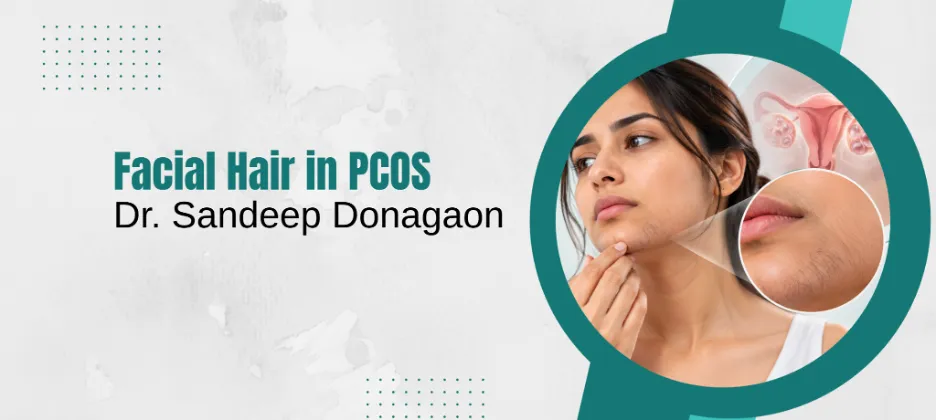
For many women with PCOS, unwanted facial hair, on the chin, upper lip, jawline, or cheeks, is one of the most emotionally difficult symptoms to deal with. It’s visible, it’s daily, and it often feels far more personal than other PCOS symptoms happening internally. What makes it more frustrating is that shaving, threading, or waxing only ever manages the surface, without touching the hormonal cause underneath.
Dr. Sandeep Donagaon, a leading endocrinologist in Hubli Dharwad at Dr. Sandeep’s Superspeciality Centre, explains that facial hair growth in PCOS, medically called hirsutism, is driven by elevated androgens, and that lasting improvement almost always requires addressing that hormonal imbalance directly, not just the hair itself.
“Facial hair in PCOS isn’t a grooming issue, it’s a hormonal one. Removing the hair temporarily treats the symptom, but unless the underlying androgen excess is managed, the same hair keeps coming back, often more persistently over time.”
— Dr. Sandeep Donagaon, Endocrinologist, Dr. Sandeep’s Superspeciality Centre, Hubli
Why PCOS Causes Facial Hair Growth
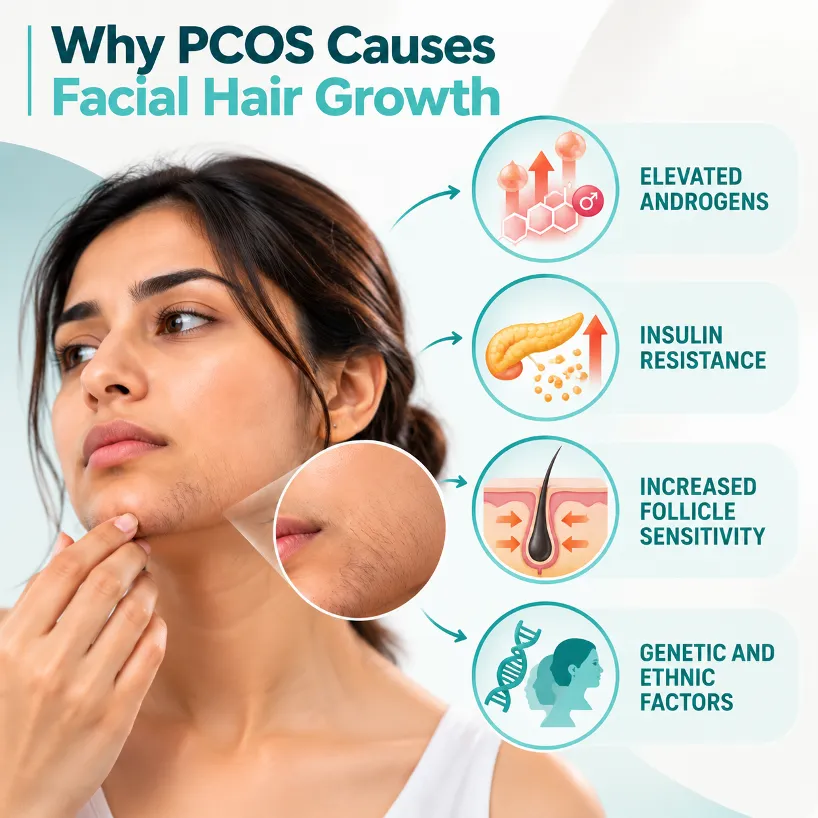
Elevated Androgens:
PCOS is associated with higher levels of androgens, hormones like testosterone, which stimulate hair follicles on the face, chest, and abdomen to produce thicker, darker terminal hair instead of fine vellus hair.Insulin Resistance:
Elevated insulin levels, common in PCOS, can further increase androgen production from the ovaries, compounding the effect on hair growth. This same mechanism is closely tied to how PCOS-related weight gain and belly fat develop.<Increased Follicle Sensitivity:
Some women have hair follicles that are simply more sensitive to normal or mildly elevated androgen levels, which is why facial hair severity doesn’t always correlate directly with blood hormone readings.Genetic and Ethnic Factors:
Family history and ethnic background influence how much facial and body hair growth occurs in response to the same degree of hormonal imbalance, which is why two patients with similar hormone levels can look quite different.Why Hair Removal Alone Doesn't Solve the Problem
This is where most patients get stuck, cycling through shaving, waxing, threading, or laser sessions without ever addressing why the hair keeps returning so persistently.
It Treats the Symptom, Not the Cause:
Physical hair removal methods manage what’s already grown, but do nothing to reduce the androgen activity driving new hair growth.
Hair Can Return Thicker with Some Methods:
Repeated plucking or waxing over already-stimulated follicles can sometimes make regrowth feel coarser or more noticeable over time.
The Underlying Hormonal Imbalance Persists:
Without treatment targeting insulin resistance or androgen levels, new follicles continue to be stimulated, meaning hair removal becomes a never-ending routine rather than a long-term solution.
Other Conditions That Can Cause Facial Hair
Not every case of excess facial hair is PCOS, and ruling out other causes is an important part of a proper evaluation.
Thyroid Disorders:
Thyroid imbalance can overlap with PCOS symptoms or worsen hormonal disruption, which is why a proper thyroid evaluation and treatment is often part of a complete workup. Readers exploring the link between thyroid problems and long-term treatment can also read whether hypothyroidism can be cured permanently.
Adrenal Gland Disorders:
The adrenal glands also produce androgens, and rarely, a tumour or overactivity in these glands can cause rapid or severe facial hair growth. If hair growth is sudden or unusually severe, evaluation for adrenal gland tumours may be needed.
Pituitary and Other Hormonal Causes:
Conditions affecting the pituitary gland, or elevated prolactin, can also disrupt androgen balance and contribute to facial hair growth, which is why a thorough hormonal workup matters before assuming PCOS alone.
Medication Side Effects:
Certain medications can also stimulate unwanted hair growth, which is worth reviewing during consultation.
How Facial Hair in PCOS Is Actually Treated
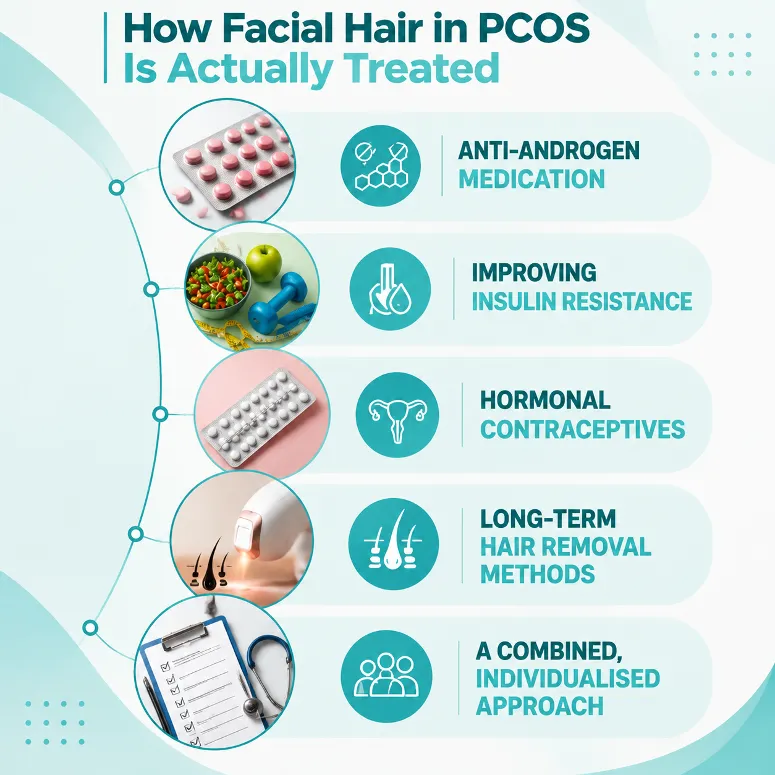
Effective treatment usually combines medical management of the hormonal cause with hair removal methods for the hair that’s already there.
Anti-Androgen Medication:
Medications that block androgen activity at the follicle level can meaningfully slow new hair growth over several months, though they don’t remove existing hair.
Improving Insulin Resistance:
Since insulin resistance drives excess androgen production, treatment such as metformin, alongside dietary and lifestyle changes, can reduce the hormonal trigger behind facial hair over time.
Hormonal Contraceptives:
Certain combined oral contraceptives can help regulate androgen levels and are commonly used as part of a broader PCOS management plan, always selected based on individual health history.
Long-Term Hair Removal Methods:
Laser hair reduction or electrolysis can meaningfully reduce visible hair over time and works best when combined with hormonal treatment, since it addresses existing hair while medical treatment reduces new growth.
A Combined, Individualised Approach:
Most patients see the best results with a plan that pairs hormonal correction through hormonal treatment with a suitable hair removal method, rather than relying on either approach alone.
Dr. Sandeep Donagaon notes:
“The patients who see the most lasting improvement are the ones who treat both sides of the problem, the hormone level driving new growth, and the existing hair itself. Doing only one rarely gives a satisfying result.”
How Long Does Treatment Take to Show Results?
Setting realistic expectations upfront makes the process far less discouraging for most patients.
Medication Takes Time:
Anti-androgen treatment typically takes three to six months before a noticeable reduction in new hair growth is seen, since existing hair follicles have already been stimulated.
Hair Removal Provides Immediate but Temporary Results:
Laser or electrolysis sessions reduce visible hair progressively over multiple sessions, but work best when paired with hormonal treatment to prevent new growth from undoing the progress.
Consistency Matters More Than Speed:
Facial hair reduction in PCOS is a gradual process, and patients who stay consistent with both medical treatment and hair removal tend to see the most meaningful, lasting change.
According to the American Society for Reproductive Medicine, hirsutism affects a significant proportion of women with PCOS and is considered one of the condition’s most visible and psychologically distressing symptoms, underscoring the importance of proper hormonal evaluation rather than relying on cosmetic measures alone.
Other PCOS Symptoms Often Linked to Facial Hair
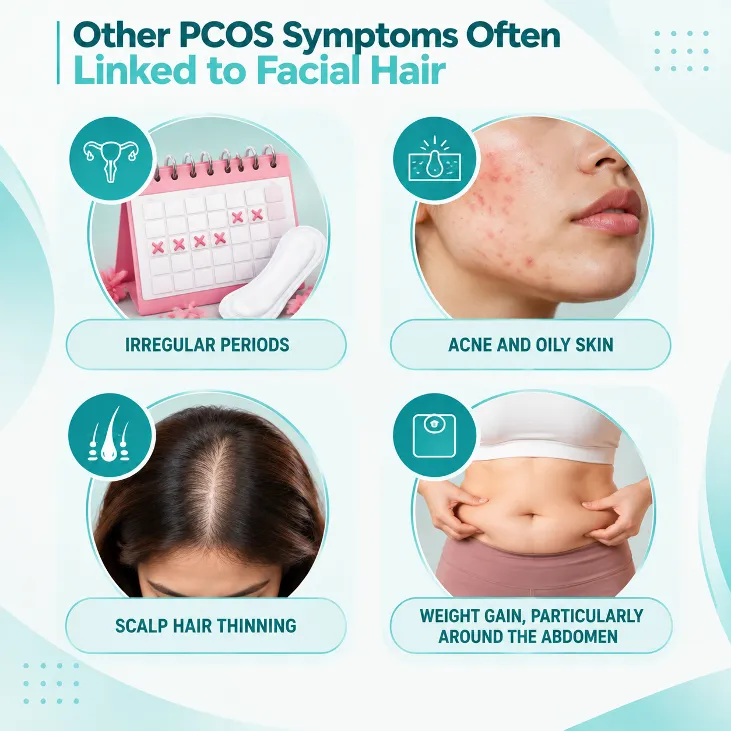
Facial hair growth rarely occurs in isolation, and recognising related symptoms helps build a more complete picture during diagnosis.
Irregular Periods:
Androgen excess and insulin resistance that drive facial hair also commonly disrupt ovulation and menstrual regularity.
Acne and Oily Skin:
Elevated androgens frequently contribute to persistent acne along the jawline and chin, alongside facial hair growth.
Scalp Hair Thinning:
Paradoxically, the same hormonal imbalance that increases facial hair can contribute to thinning hair on the scalp in a pattern resembling male-pattern hair loss.
Weight Gain, Particularly Around the Abdomen:
Insulin resistance linked to facial hair growth is also a key driver of PCOS-related abdominal weight gain, which is why a broader metabolic evaluation, including obesity and weight-loss assessment, is often part of a complete PCOS workup.
Facial Hair in PCOS Management in Hubli Dharwad by Dr. Sandeep Donagaon
Dr. Sandeep Donagaon brings a DM in Endocrinology from Ramaiah Medical College, Bengaluru, along with the SCE in Endocrinology from the UK, and has treated thousands of patients at Dr. Sandeep’s Superspeciality Centre in Hubli. His approach to facial hair in PCOS begins with a proper hormonal workup, androgen levels, insulin resistance, and thyroid function, before recommending a treatment plan, supported by in-house lab and diagnostic facilities for streamlined, accurate testing. You can explore further patient resources on the practice’s blog. Patients from Hubli, Dharwad, Belagavi, Gadag, Haveri, Davangere, and across North Karnataka come to the centre for individualised, evidence-based PCOS care.
“Facial hair in PCOS can genuinely be managed well, but it needs an accurate diagnosis first. Guessing at treatment without knowing the actual hormone picture rarely gives patients the results they’re hoping for.”
— Dr. Sandeep Donagaon
Conclusion
Facial hair in PCOS is driven by elevated androgens and insulin resistance, not just genetics or bad luck, which is why hair removal alone rarely provides lasting relief. A combined approach, addressing the hormonal cause through medical treatment while managing existing hair with appropriate removal methods, offers the most realistic path to meaningful, long-term improvement. Getting a proper hormonal evaluation is the step that makes the biggest difference in outcome.
Frequently Asked Questions
1. Why does PCOS cause facial hair growth?
2. Can facial hair from PCOS be permanently removed?
3. How long does it take for anti-androgen medication to work?
4. Does losing weight help reduce facial hair in PCOS?
5. Should I see a doctor for facial hair, or just get laser treatment?
- References:
American Society for Reproductive Medicine — Hirsutism and PCOS: https://www.reproductivefacts.org/ - Cleveland Clinic — Polycystic Ovary Syndrome (PCOS): https://my.clevelandclinic.org/health/diseases/8316-polycystic-ovary-syndrome-pcos